What Would Your Week Look Like If It Actually Supported You?
If your schedule only works when you are energized, disciplined and uninterrupted, it does not support your real life. It supports an imaginary version of you.
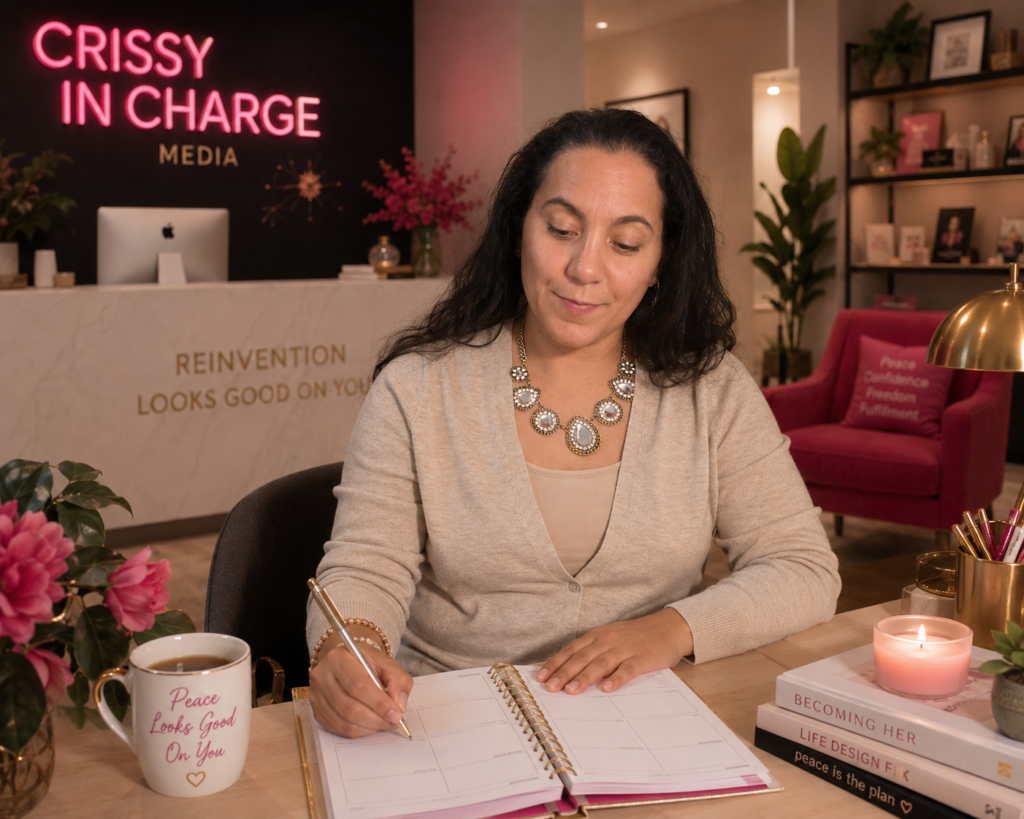
A supportive schedule is not built for your best day. It leaves room for your real body, real responsibilities and real life.
By Tuesday or Wednesday, my body can already tell me the truth about the week I designed.
I feel burned out, stressed and achy. During overtime weeks, I may work fourteen to sixteen hours in a day. Content creation gets pushed aside. Home responsibilities pile up. Rest becomes the thing I try to squeeze into whatever is left.
On paper, I can create a beautiful schedule. In real life, that schedule often assumes I will always have energy, push through exhaustion, sacrifice sleep and somehow fit my dream into the scraps of time that remain.
A system that only works when I am at my best is a failed system.
That sentence changed the way I think about productivity. A supportive week is not necessarily the week when a woman checks the most boxes. If she needs to rest for a week, and that rest allows her to recover enough to do what matters next, that week was productive too.
The fantasy schedule versus your actual life
Many planning systems are designed for a woman with predictable energy, uninterrupted time and complete control of her calendar. That woman does not live at my house.
My work schedule can be rigid. My energy is not. I need to pivot, change the order of tasks and respond to what my body and responsibilities require. A plan that treats every change as failure creates more pressure instead of more support.
The problem is not that you need a prettier planner. The problem may be that your calendar was built around output while your humanity was treated like an inconvenience.
A supportive schedule makes room for work and external responsibilities without taking everything away from self-preservation.
Soft life is a form of self-preservation
The internet often packages soft life as luxury travel, spa days and beautiful rooms. I enjoy those things too, but they are not the foundation.
A soft life begins when you treat rest and emotional safety as necessities instead of rewards. It is honoring your boundaries before resentment forces you to. It is listening to your body before it has to scream. It is creating enough internal and external peace to become receptive, intuitive and connected to yourself.
Feminine energy, in my everyday life, means I honor my boundaries, prioritize rest and create room to attract abundance from a state of flow—not permanent force.
Soft does not mean passive. It means your life is no longer built entirely around proving how much discomfort you can survive.
What a supportive week would hold
My ideal week includes meditation three or four times a day, less time devoted to my job, a morning workout, an evening stretch, light daily home care and protected time for content creation and business building. It includes one day with my daughter. It also includes unstructured space—the kind that allows an idea, a feeling or simple joy to arrive without an appointment.
The Reset Studio is part of that design. It is where I can create content, build community, find a quiet corner, plan for the future and brainstorm. A supportive environment cannot remove every demand, but it can give your nervous system a place to land.
Meditation has been my most reliable hard-day system. It does not complete my responsibilities for me. It brings me back to myself so I can hear what I need and choose my next move with more intention.
Design from capacity, not fantasy
Before you fill another weekly calendar, ask four questions:
What is fixed? Name the responsibilities you truly cannot move this week.
What is flexible? Identify tasks that can change days, order or format.
What restores me? Put at least one form of restoration into the plan before the week consumes the available space.
What happens on a hard day? Decide what can shrink, move or disappear when your capacity drops.
Your supportive week does not have to resemble mine. It has to tell the truth about your life.
Begin the day by honoring yourself
Try one small change tomorrow morning. Before your phone, your list or somebody else’s needs get the first word, pause.
Honor yourself. Praise yourself. Listen to your heart. Then ask: What do I need today?
Your answer may not cancel every obligation. But it changes the relationship you have with your day. You stop treating yourself as the final item on the schedule and begin designing from the inside out.
I am rebuilding a life with intention and living in purpose. I am also still figuring it out. That is not a contradiction. It is the work.
Peace belongs in the plan—not because every day will be peaceful, but because peace helps balance the internal friction that constant doing creates.
If your current week leaves no room for the woman living it, take the Reset Audit. It will help you identify which part of your life needs support first.